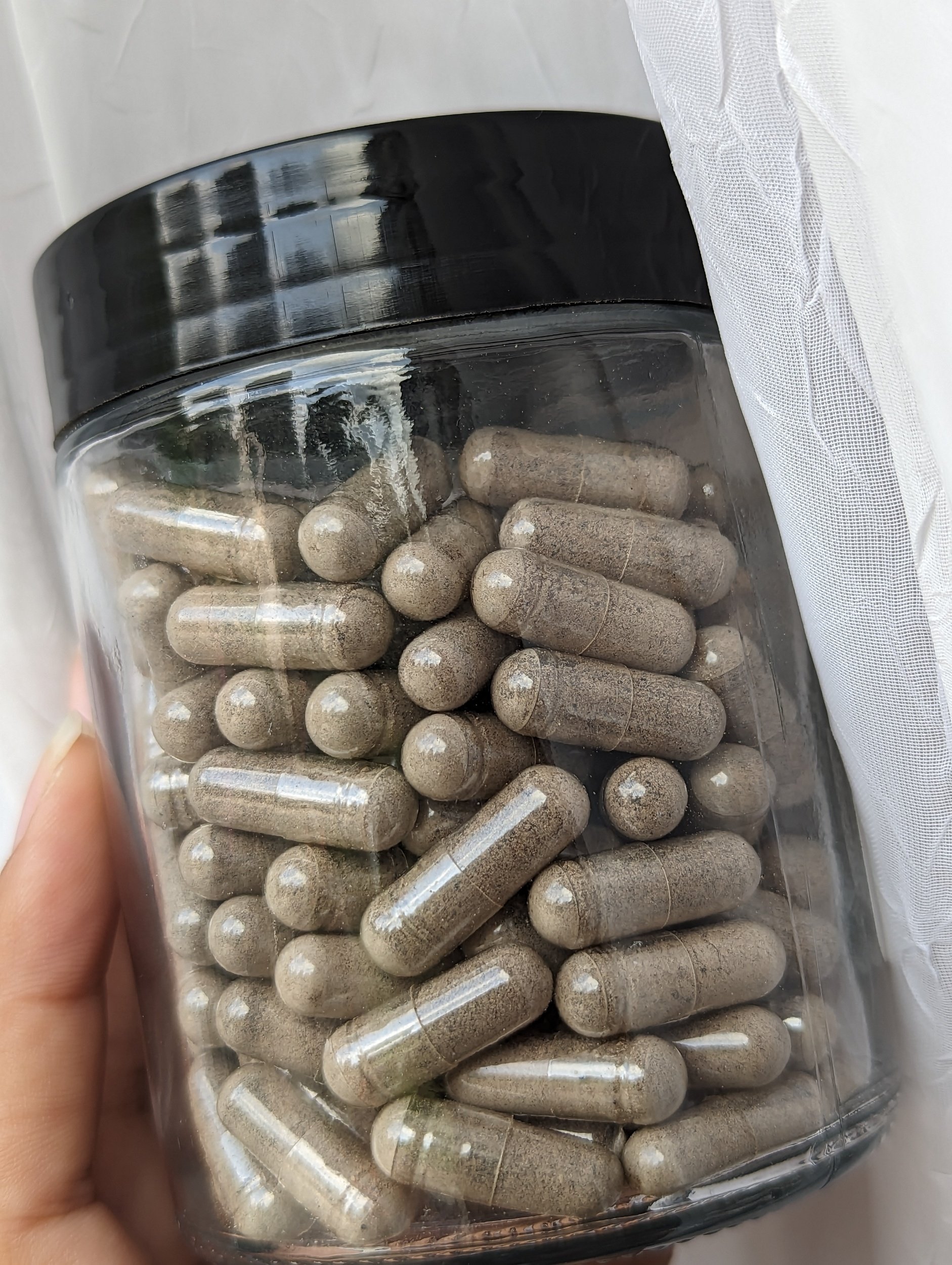
Placenta Encapsulation
Expecting a baby and curious about placenta encapsulation? Let me guide you through everything you need to know!
If you decide that encapsulation is the way to go, I'm here to assist you every step of the way.
What is the Placenta?
The placenta is the most exciting organ ever! It is formed only during pregnancy and when it is no longer needed, expels itself from the body. The placenta attaches itself to the inside of the uterine wall and forms a protective amniotic sac around the baby. There the baby floats in amniotic fluid. There is an umbilical cord inside the amniotic sac that helps provide oxygen, nutrients, and blood between the pregnant person and the baby.

Possible Benefits of the Placenta
Helps with Postpartum Depression
Releases Oxytocin, helping return the uterus to its normal size & enhancing mother-infant bonding
Increased Iron Levels - Iron deficiency can result in insufficient milk syndrome. Iron also helps reduce postpartum bleeding
Potential to prevent or minimize mood swing
Potential to increase energy
The potential benefits of placenta encapsulation may be emotional, physical, and / or mental. Your experience will be a personal one and I can’t wait to hear about it!
Possible Risks
Risk of transmitting infections to the infant due to infections present during the birth. It is best to rule out any infection before proceeding with consumption of the placenta.
Improper storage of the placenta could lead to a bacterial infection making you sick (think of it like food poisoning).
Do not rely solely on the placenta for your nutrients. This could lead to nutrient deficiencies is potentially harmful to the parent and baby.
Placenta Encapsulation Options and Add-Ons
-
Your placenta will be steamed with your choice of spices and herbs. I then dehydrate and grind your placenta into a very fine powder and put into capsules for consumption.
-
Your placenta is placed in the dehydrator raw and the dehydration process is started. After that is completed, I grind your placenta into a very fine powder and put into capsules for consumption.
-
Before your placenta is processed, a small piece can be removed to provide you with a placenta tincture. This would be used AFTER you have completed your pills and would like to continue with the benifits of your placenta. The piece is placenta in a dropper bottle with either high-grade alcohol or apple cider vinegar to help aid in processing.
-
Receive $100 off Placenta Encapsulation when bundled with any of my Doula Care options.
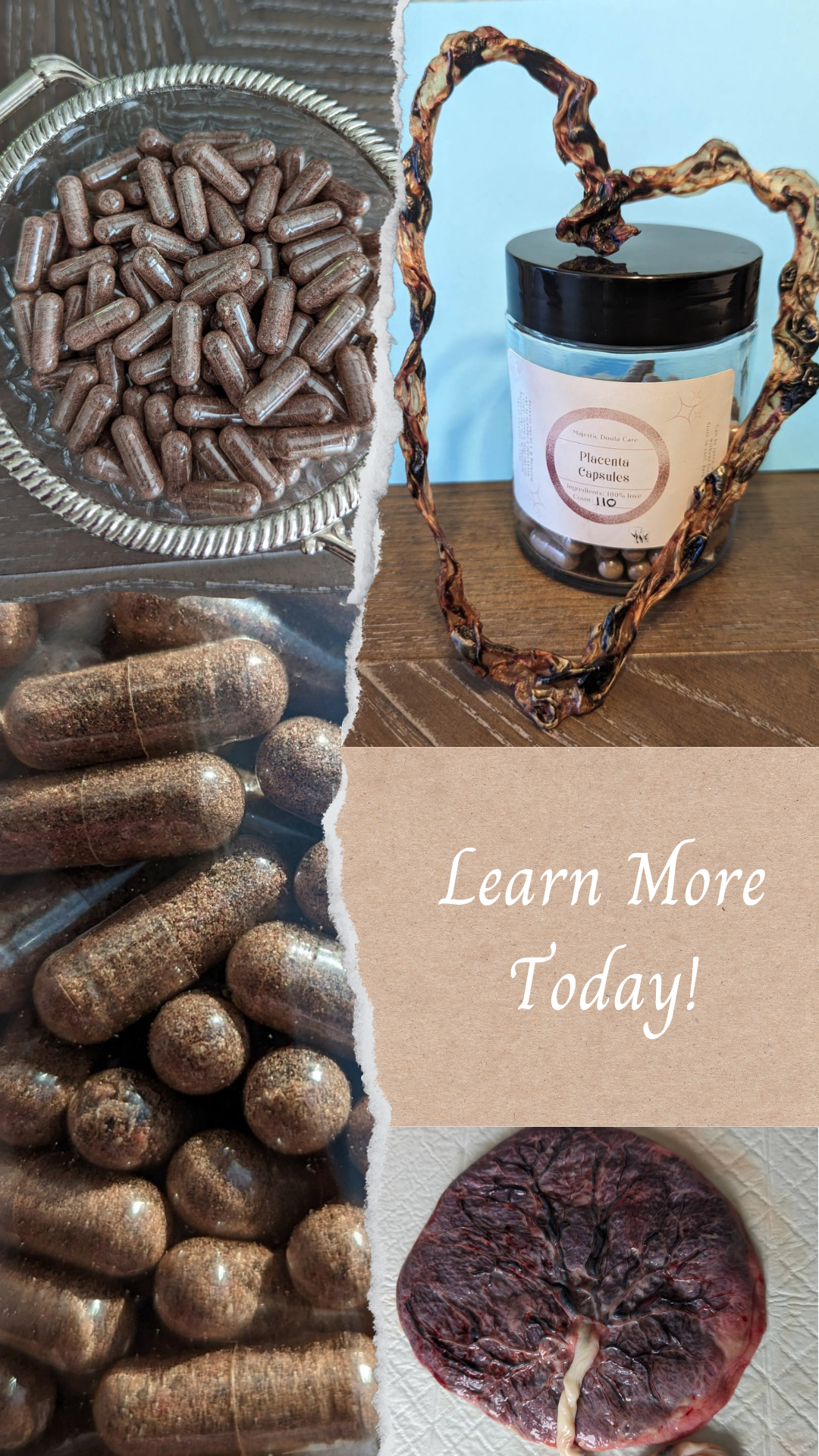

The inside. This is where the baby lives.
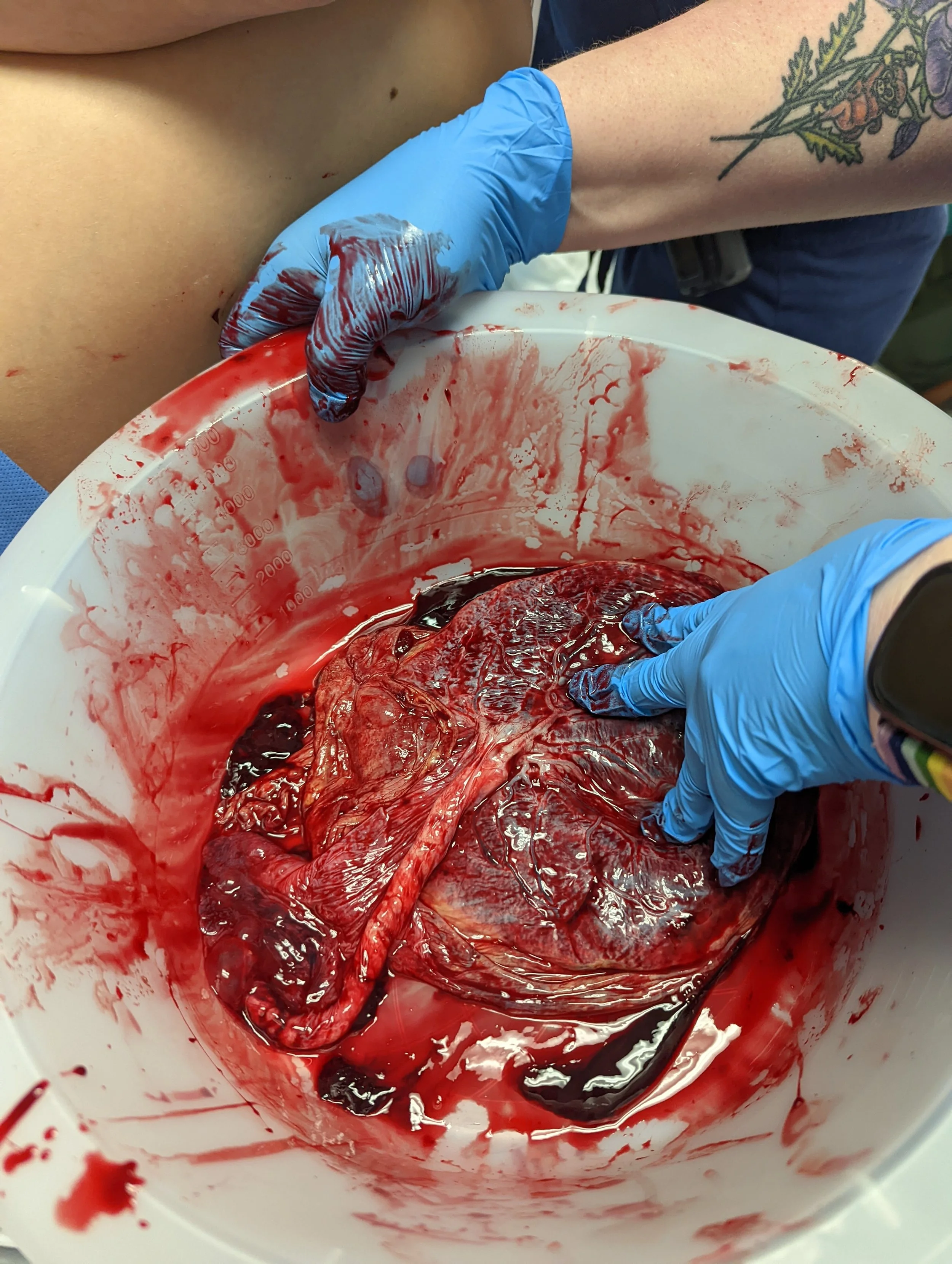
When turned inside out you see the tree of life.

This is the side that is attached to the uterus.

Check out the length of this umbilical cord!

Some placentas' are tiny and some are large. Here we see a tiny one.